The Glenn Pendlay Method: A Comprehensive Guide
Glenn Pendlay’s method, often found as a PDF resource, emphasizes classic lifts and structured periodization. Numerous archived articles and programs, like those on Lift Vault, detail his coaching philosophy and training cycles.
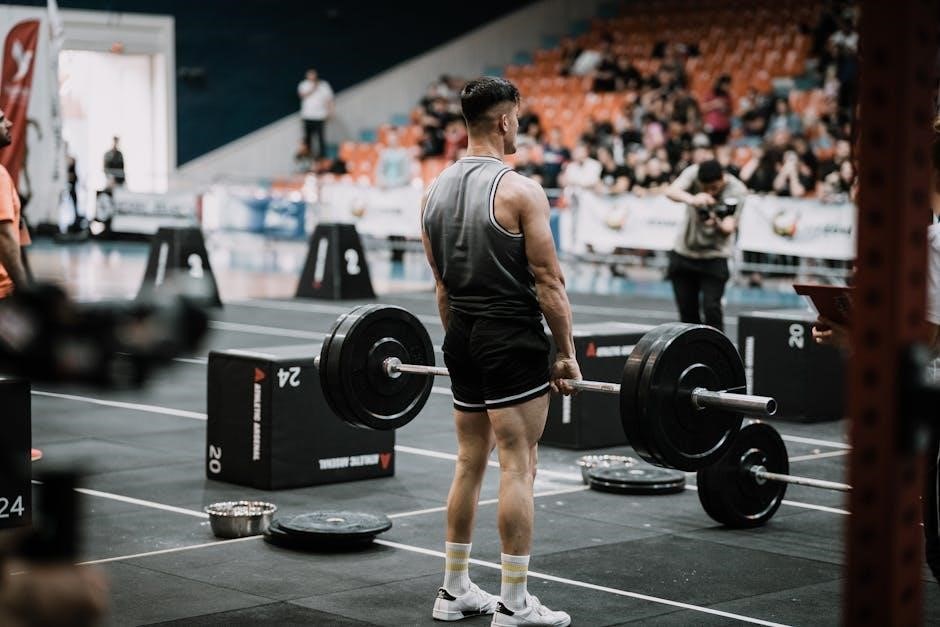
Glenn Pendlay (1951-2024) was a highly influential American weightlifting coach, renowned for his pragmatic and results-oriented approach. His coaching philosophy, often detailed in PDF format through archived articles and programs, centered on building a strong foundation of strength through the core Olympic lifts – the snatch, clean & jerk, and squat.
Pendlay’s method eschewed overly complex training methodologies, prioritizing consistent practice of fundamental movements. He believed in categorizing athletes based on their strengths and weaknesses, tailoring programs to individual needs. Many resources, including those found on Lift Vault, showcase his 12-week beginner programs and more advanced 6- and 8-week intermediate cycles;
His emphasis on technique, progressive overload (using methods like “snakes and ladders”), and strategic accessory work formed the cornerstone of his success. The availability of his programs as PDF documents has allowed his methods to be widely disseminated and studied by coaches and athletes globally, solidifying his legacy within the sport.
The Core Principles of the Pendlay Method
The Glenn Pendlay Method, often accessible via PDF resources, revolves around several key principles. Primarily, it prioritizes the development of strength in the competition lifts – snatch, clean & jerk, and squat – as the foundation for success. Pendlay advocated for a focus on technique mastery before chasing maximal weights, a concept frequently highlighted in available training programs.
Progressive overload is central, utilizing techniques like “snakes and ladders” to systematically increase training stress. Periodization, with clearly defined training cycles, is another cornerstone, ensuring athletes peak at optimal times. His programs, often shared as PDFs, emphasize structured set and rep schemes, including EMOM (Every Minute on the Minute) sets.
Furthermore, Pendlay’s approach incorporates strategic accessory work to address weaknesses and enhance overall athleticism. The method’s practicality and emphasis on measurable progress, documented in numerous PDF guides, contribute to its enduring popularity among weightlifting coaches and athletes.
Athlete Categorization in Pendlay’s System
Glenn Pendlay’s training methodology, often detailed in PDF format, wasn’t a one-size-fits-all approach. He strongly believed in categorizing athletes based on their experience level and current strength capabilities. This categorization dictated the appropriate training program and progression. Beginners were started with foundational movements and a focus on technique, often following a 12-week outline readily available as a PDF.
Intermediate lifters, as outlined in 6-day or 8-week programs (also frequently found as PDFs), experienced increased volume and intensity. Pendlay’s system recognized the need for individualized adjustments based on an athlete’s response to training. He didn’t rigidly adhere to pre-defined schedules, but rather adapted them based on performance and recovery.
Advanced lifters would receive highly customized programs, building upon the foundational principles. The core principle was to match the training stimulus to the athlete’s capacity, ensuring continuous progress, a concept thoroughly explained in various PDF resources attributed to his coaching.
Training Cycle Length and Periodization
Glenn Pendlay’s periodization, often documented in accessible PDF guides, wasn’t about complex, multi-phase systems. Instead, he favored relatively short training cycles, typically ranging from 8 to 12 weeks, allowing for frequent assessment and adjustment. These cycles were built around the core Olympic lifts – snatch, clean & jerk, and squat – with a focus on progressive overload.
His PDF programs frequently showcased a linear progression within each cycle, increasing weight or volume week by week. However, Pendlay wasn’t afraid to deload or adjust the program based on an athlete’s response. He prioritized consistent, measurable progress over rigidly adhering to a pre-determined plan.
The emphasis was on building strength and technique concurrently. The PDF resources highlight his preference for frequent testing of 1RM (one-rep max) to gauge progress and inform subsequent training blocks. This practical approach made his method adaptable and effective for various lifters.
Beginner Olympic Weightlifting Program (12-Week Outline)
Glenn Pendlay’s 12-week beginner program, widely available as a PDF, provides a structured introduction to Olympic weightlifting. It prioritizes foundational strength and technique development, focusing on mastering the core lifts before introducing complex variations. The program, originally published on his now-defunct blog and archived on platforms like Lift Vault, emphasizes consistency and proper form.
The PDF outline typically begins with a focus on building a solid squat base, followed by gradual introduction of the snatch and clean & jerk. Volume is relatively low initially, with a focus on perfecting technique. As the weeks progress, the program introduces progressive overload, increasing weight and/or volume incrementally.
Supplemental exercises, detailed in the PDF, are included to address weaknesses and improve overall athleticism. This program serves as an excellent starting point for individuals new to Olympic weightlifting, providing a clear path to improvement.
3-Day Beginner Program Structure
Glenn Pendlay’s 3-day beginner program, often distributed as a PDF, is designed for individuals new to Olympic weightlifting, offering a manageable frequency for skill acquisition. This structure, detailed on LiftVault.com, prioritizes fundamental movement patterns and technique refinement over maximal loading. Each session typically focuses on a specific lift or movement complex.
A typical week might include a day dedicated to squats and deadlifts, another to the snatch, and a third to the clean & jerk. The PDF emphasizes quality over quantity, with lower rep ranges and a focus on maintaining proper form throughout each set. Accessory work, also outlined in the PDF, supports the main lifts and addresses potential weaknesses.
This 3-day split allows for adequate recovery between sessions, crucial for beginners adapting to the demands of Olympic weightlifting. It’s a foundational program for building a solid base of strength and technique.
6-Day Intermediate Program Structure
Glenn Pendlay’s 6-day intermediate program, frequently available as a PDF, represents a significant increase in training volume and complexity compared to the beginner phase. Programs like the one detailed on Lift Vault demonstrate a higher frequency of lifting, demanding greater recovery capacity from the athlete. This structure is geared towards lifters with a foundational understanding of Olympic lifting technique.
The PDF typically divides training into dedicated days for squats, Olympic lifts (snatch and clean & jerk), and assistance work. Expect multiple sessions focusing on variations of the core lifts, utilizing set and rep schemes like those described in the original spreadsheets. The program incorporates periodization principles, varying intensity and volume over time.
This 6-day split allows for more specialized training, targeting specific weaknesses and maximizing strength gains. The PDF often includes notes from Pendlay himself regarding programming adjustments and considerations.

8-Week Intermediate Program Structure
Glenn Pendlay’s 8-week intermediate programs, often circulated as PDF documents, build upon the 6-day structure, refining intensity and volume for peak performance. Resources like those found on Lift Vault showcase a progressive overload approach, carefully manipulating training variables over the eight-week cycle. These programs are designed for lifters who have successfully completed a beginner phase and are seeking substantial strength and technique improvements.
The PDF typically outlines a phased approach, starting with higher volume and lower intensity, gradually transitioning to lower volume and higher intensity as the cycle progresses. Expect detailed set and rep schemes, often utilizing percentages of the lifter’s one-rep maximum (1RM). Accessory work remains crucial, supporting the primary lifts and addressing individual weaknesses.
Pendlay’s PDF programs emphasize consistent tracking of progress and making adjustments based on individual response. The structure aims to prepare athletes for competition or further advanced training.
Key Lifts in the Pendlay Method

Glenn Pendlay’s training, detailed in various PDF resources, centers around the core Olympic lifts – Squats, Snatches, Clean & Jerks, and Deadlifts – prioritizing technical proficiency and strength development. These lifts aren’t isolated; they’re interconnected, forming the foundation of his system. PDF guides emphasize that Squats are the cornerstone, building overall strength and stability.
Snatches and Clean & Jerks, as outlined in available PDF materials, are approached with a focus on technique refinement, utilizing drills and progressive overload. Deadlifts, crucial for posterior chain strength, are integrated to support the Olympic lifts. Pendlay’s method isn’t about maximizing weight at any cost; it’s about mastering the movements.
The PDF programs often include specific variations of these lifts, tailored to address individual weaknesses and promote balanced development. Proper execution is paramount, as emphasized throughout his coaching philosophy.
Squats: Foundation of Strength
Glenn Pendlay’s method, as detailed in numerous PDF resources, unequivocally positions the Squat as the foundational lift for developing overall strength and athletic power. These PDF guides consistently highlight its importance, not merely as a leg exercise, but as a full-body movement crucial for supporting the Olympic lifts. Pendlay advocated for high-bar back squats, emphasizing proper technique and depth.
PDF programs often feature significant squat volume, utilizing variations to address individual weaknesses and build a robust base. The emphasis isn’t on simply lifting heavy weight, but on maintaining correct form throughout the entire range of motion. This focus on technique, as outlined in available PDF materials, minimizes injury risk and maximizes strength gains.
Pendlay believed a strong squat directly translated to improved performance in the Snatch and Clean & Jerk, making it the cornerstone of his training philosophy.
Snatches: Technique and Progression
Glenn Pendlay’s approach to the Snatch, as documented in available PDF resources, prioritizes meticulous technique development over immediate weight increases. His programs, often shared as PDF guides, emphasize a gradual progression, building a solid foundation before attempting heavier loads. Pendlay advocated for a focus on speed under the bar and a powerful extension, crucial elements detailed within these PDF materials.
The PDF resources highlight the importance of consistent practice with lighter weights to refine movement patterns and address technical flaws. Pendlay’s method doesn’t shy away from drills and accessory work designed to improve specific aspects of the Snatch, like overhead stability and pulling power. These drills are frequently outlined in the PDF programs.
He believed mastering the Snatch required patience and a commitment to perfecting technique, a philosophy consistently reflected in his training PDFs.
Clean & Jerk: Building Explosive Power
Glenn Pendlay’s Clean & Jerk methodology, detailed in various PDF training programs, centers around developing explosive power through consistent practice of the two movements. His PDF resources emphasize a strong focus on the pull, advocating for a powerful extension and aggressive turnover to maximize bar velocity. Pendlay’s programs, often available as PDF downloads, break down the lift into distinct phases for targeted improvement.
The PDF materials highlight the importance of a stable rack position and a controlled, yet explosive, jerk. Accessory work, frequently outlined in the PDF guides, is strategically incorporated to address weaknesses in both the Clean and the Jerk. Pendlay’s approach prioritizes building a strong base of strength and technique before progressing to heavier weights, a principle consistently found in his PDF programs.
He believed mastering the Clean & Jerk required a blend of technique, strength, and explosive power, all meticulously detailed in his PDF resources.
Deadlifts: Developing Posterior Chain Strength
Glenn Pendlay’s approach to the deadlift, as outlined in his PDF training materials, prioritizes developing a robust posterior chain – the muscles along the back of the body. His PDF programs emphasize a conventional deadlift style, focusing on maintaining a flat back and driving through the heels. Pendlay’s PDF resources often include variations like deficit deadlifts to further challenge the posterior chain and improve starting strength.
The PDF guides detail the importance of proper setup and technique, stressing the need for a strong grip and a controlled descent. Accessory exercises, frequently listed in the PDF documents, are strategically chosen to support the deadlift, targeting glutes, hamstrings, and lower back. Pendlay’s method, detailed in PDF format, isn’t about maximal weight at the expense of form.
He believed a strong posterior chain was fundamental to overall strength and power, a concept consistently reinforced throughout his PDF training programs.
Set and Rep Schemes: Understanding Pendlay’s Approach
Glenn Pendlay’s set and rep schemes, detailed in available PDF resources, are characterized by a focus on intensity and volume, varying based on the athlete’s level and training cycle. His PDF programs frequently utilize a system of sets x reps (e.g., 23 signifying 2 sets of 3 reps), a notation often explained within the PDF documentation. Pendlay’s PDF guides demonstrate a preference for lower rep ranges with heavier weights, particularly for the core lifts.
The PDF materials highlight the importance of adjusting volume based on individual recovery and progress. He often employed techniques like EMOM (Every Minute on the Minute) sets, thoroughly explained in his PDF articles, to maximize work density. Pendlay’s PDF programs also incorporate progressive overload strategies, such as “snakes and ladders,” to continually challenge athletes.
His PDF resources emphasize that these schemes aren’t rigid, but rather guidelines to be adapted based on the athlete’s response.
EMOM (Every Minute on the Minute) Sets
EMOM (Every Minute on the Minute) sets are a cornerstone of Glenn Pendlay’s training methodology, extensively detailed within his published PDF materials. These PDF resources explain that EMOM involves performing a specific number of repetitions of an exercise at the start of each minute, with the remaining time in that minute serving as rest; This method, as outlined in the PDF guides, allows for high volume and intensity while managing fatigue.
Pendlay’s PDF programs demonstrate how EMOM sets are particularly effective for developing work capacity and conditioning. The PDF documentation stresses the importance of selecting appropriate weights and rep ranges to maintain good form throughout the entire EMOM workout. His PDF articles often provide examples of EMOM protocols for various lifts, including squats, cleans, and jerks.
The PDF materials emphasize that EMOM sets are a tool for increasing training density and should be implemented strategically.
Snakes and Ladders: Progressive Overload Technique
“Snakes and Ladders” is a unique progressive overload technique championed by Glenn Pendlay, thoroughly explained in his training PDFs and articles. These PDF resources detail how this method involves fluctuating the weight lifted across sets, resembling the ascent and descent of a snake or ladder. Typically, weight is increased for each successive set (the “ladder” portion) until a failure point is reached.
Upon failing a set, the weight is then reduced (the “snake” portion) for subsequent sets, allowing the athlete to continue performing repetitions with good technique. The PDF guides emphasize that this isn’t simply deloading; it’s a structured way to accumulate volume at varying intensities. Pendlay’s PDFs illustrate how this technique builds both strength and endurance.
The PDF materials highlight that “Snakes and Ladders” is best suited for compound lifts and requires careful monitoring of technique to prevent injury.
Isometrics: Utilizing Static Holds for Strength Gains
Glenn Pendlay’s training methodology, detailed in available PDF resources, incorporates isometric exercises as a valuable tool for strength development. These PDF guides explain that isometrics – holding a static position against resistance – are particularly effective for reinforcing specific points within the lifts, addressing weaknesses and improving stability.
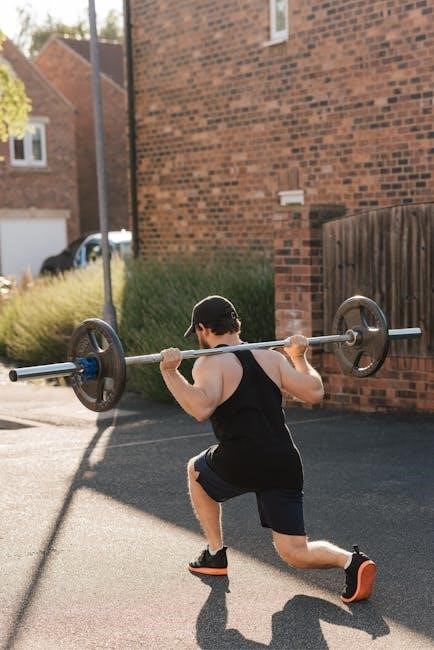
Pendlay’s approach, as outlined in his PDFs, isn’t about prolonged static holds, but rather short, intense contractions at key positions, like the bottom of a squat or during the pull of a deadlift. The PDF materials emphasize that these holds should be performed with maximal effort, mimicking the feeling of attempting to move an immovable object.

The PDFs suggest integrating isometrics strategically within a training cycle, often during deload weeks or as supplemental work to address sticking points. This method, according to Pendlay’s PDFs, enhances strength and technique simultaneously.
Accessory Work and Supplemental Exercises
Glenn Pendlay’s training programs, often detailed in PDF format, strategically incorporate accessory work to support the primary Olympic lifts. These PDF resources highlight that accessory exercises aren’t about building overall muscle mass, but rather addressing specific weaknesses and reinforcing proper movement patterns.
Pendlay’s PDF guides emphasize exercises that directly translate to improved performance in the snatch, clean & jerk, and squats. Common accessories include core strengthening work – crucial for stability – and upper body assistance exercises to support the lifts. Resistance bands, as described in the PDFs, are frequently used for accommodating resistance, adding intensity at the top of the movement.
The PDF materials stress a minimalist approach; accessory work should be purposeful and not detract from the focus on the core lifts. Pendlay’s philosophy, as presented in his PDFs, prioritizes quality over quantity in supplemental training.
Bands: Adding Accommodating Resistance
Glenn Pendlay’s training methodology, frequently documented in PDF resources, utilizes resistance bands as a valuable tool for “accommodating resistance.” These PDF guides explain that bands provide varying levels of resistance throughout the lift’s range of motion, challenging athletes where they are strongest.
The PDF materials detail how bands are commonly attached to barbells during squats and bench presses. This addition increases resistance as the lifter ascends, forcing them to accelerate through the sticking point. Pendlay’s approach, as outlined in the PDFs, isn’t about simply adding weight, but about improving explosive power.
PDF examples show bands are selected based on the lifter’s strength level and the specific exercise. The PDFs emphasize proper band tension and secure attachment to prevent injury. Pendlay’s philosophy, detailed in these PDFs, prioritizes targeted resistance to enhance lift performance.
Core Strengthening Exercises
Glenn Pendlay’s training programs, often available as PDF documents, recognize a strong core as fundamental to successful Olympic weightlifting. These PDF resources don’t dedicate entire workouts to core work, but integrate exercises to support the primary lifts. The PDFs emphasize that core stability is crucial for transferring power efficiently.
PDF examples highlight exercises like planks, side planks, and various abdominal work, often performed as supplemental exercises. These PDF guides suggest incorporating these exercises 2-3 times per week, focusing on maintaining a rigid torso during lifts. Pendlay’s approach, detailed in the PDFs, isn’t about building massive abs, but about functional strength.
The PDF materials also suggest incorporating anti-rotation exercises, resisting twisting movements to enhance stability. Pendlay’s philosophy, as outlined in these PDFs, prioritizes a stable core to maximize force production and prevent injury during heavy lifts.
Upper Body Assistance Work
Glenn Pendlay’s training methodologies, frequently documented in PDF format, incorporate upper body assistance work strategically. These PDF resources demonstrate that the focus isn’t on building hypertrophy, but on supporting the primary Olympic lifts – snatch and clean & jerk. The PDFs emphasize exercises that address weaknesses impacting lift performance.
PDF examples often include pull-ups, rows (barbell or dumbbell), and presses (bench press or overhead press) performed in moderate rep ranges. These PDF guides suggest prioritizing exercises that strengthen the back and shoulders, crucial for maintaining posture and stability. Pendlay’s approach, detailed in the PDFs, avoids excessive volume.
The PDF materials also suggest incorporating exercises to improve shoulder mobility and stability. Pendlay’s philosophy, as outlined in these PDFs, prioritizes exercises that directly translate to improved technique and power in the snatch and clean & jerk.
Learning the Lifts: Pendlay’s Emphasis on Technique
Glenn Pendlay’s method, often detailed in accessible PDF guides, fundamentally prioritizes impeccable technique above all else. These PDF resources consistently highlight that strength without proper form is ineffective and potentially dangerous. Pendlay’s coaching philosophy, as presented in these PDF documents, centers on building a solid technical foundation before increasing load.
The PDFs emphasize a deliberate, step-by-step progression, breaking down each lift – snatch, clean & jerk, squat – into its component parts. Pendlay’s approach, outlined in the PDFs, involves extensive drilling and repetition of these components. These PDF materials advocate for consistent feedback and correction from a qualified coach.
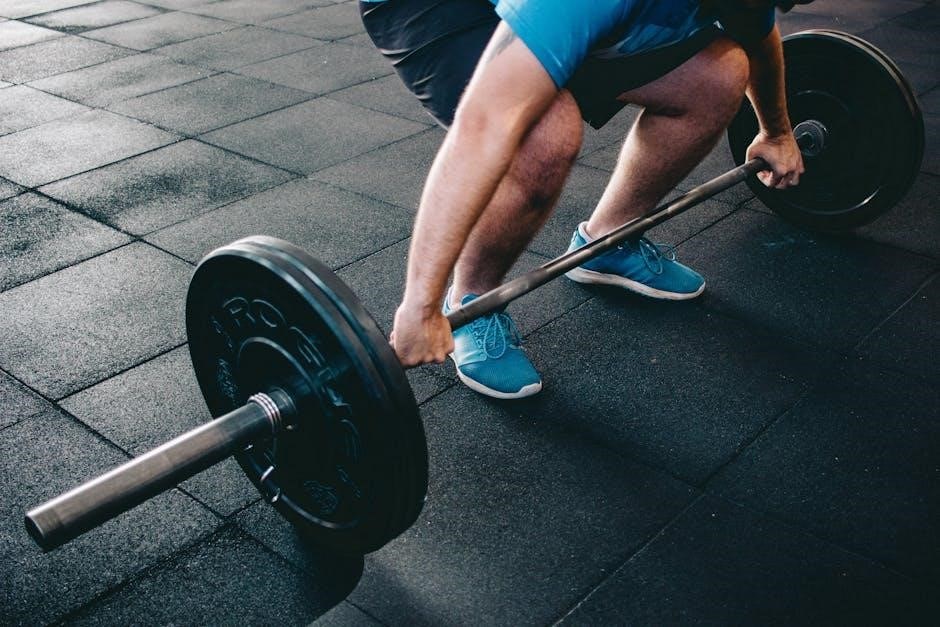
PDF examples demonstrate a focus on achieving correct bar path, body positioning, and timing. Pendlay’s belief, clearly stated in the PDFs, is that mastering technique unlocks true strength potential and minimizes the risk of injury.
Example Training Programme (Intermediate Level)
Numerous PDF resources showcase Glenn Pendlay’s intermediate programs, often a 6-day structure, detailed on platforms like Lift Vault. These PDF examples typically program lifts based on a 1RM (one-repetition maximum) calculation, utilizing set and rep schemes like “23” (2 sets of 3 reps). The PDFs reveal a focus on classic lifts – squats, snatches, clean & jerks, and deadlifts – forming the core of the training.
Pendlay’s intermediate PDF programs frequently incorporate EMOM (Every Minute on the Minute) sets and “Snakes and Ladders” for progressive overload. These PDFs demonstrate a strategic approach to volume and intensity, varying across the training week. Original notes from Pendlay, often included in the PDFs, explain his rationale behind specific set prescriptions.
The PDFs illustrate accessory work targeting core strength and upper body assistance, complementing the main lifts. These programs, available as PDF downloads, provide a practical application of Pendlay’s coaching principles.
Pendlay Training for the Supertotal
Glenn Pendlay’s approach to the Supertotal – the combined total of squat, bench press, and deadlift – is detailed in original articles often available as PDF downloads via OWLsheets. These PDF resources emphasize a strength-focused methodology, prioritizing the three lifts that comprise the Supertotal. The PDFs showcase training templates designed to maximize performance in these specific movements.
Pendlay’s PDF programs for the Supertotal typically involve a “Basic Template” approach, focusing on consistent, heavy lifting. The PDFs demonstrate a preference for classic lifts, minimizing variations and emphasizing technique. Volume and intensity are carefully managed, as outlined in the PDF documentation, to avoid overtraining and promote consistent progress.
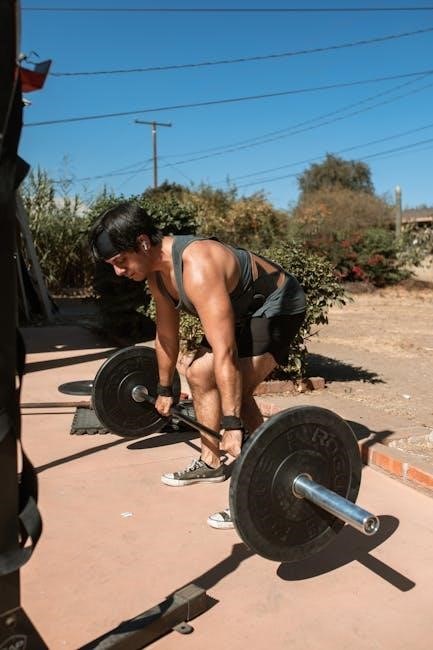
These PDF resources highlight Pendlay’s belief in building a strong foundation of general strength before specializing in Olympic weightlifting. The PDFs provide a clear framework for athletes aiming to excel in the Supertotal competition.
Resources and Further Reading
Numerous resources document Glenn Pendlay’s coaching methods, with many originally shared online and now preserved as PDF documents. Lift Vault hosts archived programs, including beginner and intermediate Olympic weightlifting outlines, often accessible as downloadable PDFs. These PDFs provide practical application of his principles.
Seb Ostrowicz’s “Practice of Weightlifting Coaching” is a highly recommended companion resource, offering a deeper dive into the theoretical underpinnings of Pendlay’s system. While not a PDF itself, it expands upon concepts found within Pendlay’s articles. OWLsheets provides access to PDFs like “Pendlay Training for the Supertotal”, offering specific program templates.
Searching online archives will reveal additional PDFs of Pendlay’s articles and training materials. These resources collectively offer a comprehensive understanding of his unique and effective approach to strength training and Olympic weightlifting.
Glenn Pendlay’s Published Articles (Archived)
Glenn Pendlay’s original training articles, frequently circulated as PDF documents, are invaluable for understanding his methodology. Many were initially published on his now-defunct blog, but have been diligently archived by weightlifting communities. Lift Vault serves as a key repository, preserving these essential resources in PDF format.
These archived articles detail specific program structures, like the 3-day beginner routine and the 6-day/8-week intermediate programs, all available as downloadable PDFs. They outline his set and rep schemes, including the use of EMOM sets, snakes and ladders, and isometric holds – all explained within the PDF content.
Finding these PDFs requires some searching, but they offer direct insight into Pendlay’s coaching philosophy and practical application. They represent the core of the Glenn Pendlay Method, providing a foundational understanding for coaches and athletes alike.
“Practice of Weightlifting Coaching” by Seb Ostrowicz
Seb Ostrowicz’s “Practice of Weightlifting Coaching” is a cornerstone resource for understanding the Glenn Pendlay Method, often complementing archived PDF materials. This book delves deeply into Pendlay’s philosophy, offering a comprehensive analysis of his training principles and coaching techniques.
While not a direct compilation of Pendlay’s original PDF articles, Ostrowicz’s work contextualizes them, providing a broader understanding of the ‘why’ behind the methods. It explores athlete categorization, training cycle length, and the nuances of periodization – concepts central to Pendlay’s approach, and often detailed in his program PDFs.
The book serves as an excellent companion to the freely available PDF programs, offering a more theoretical framework. It bridges the gap between practical application (the PDF routines) and the underlying coaching science championed by Glenn Pendlay, making it essential reading for serious weightlifting enthusiasts.